
 IoT Projects
 ML Projects


Top 10 IoT Projects for Final Year Students | B.Tech, M.Tech, Diploma

IoT projects for final year students are among the most sought-after project topics in B.Tech, M.Tech, and Diploma programmes across India. Here are the top 10 IoT projects for final year students with full component guides. IoT projects are the highest-scoring category of final-year projects across ECE, EEE, and CS departments in Indian engineering colleges. They are visual, demonstrable, connected to real problems, and prove that you understand multiple technology layers — hardware, firmware, and cloud. Below are the top 10 IoT projects for 2026, with component lists linked directly to KSP Electronics so you can order everything in one go.
Top 10 IoT Projects for Final Year Students (B.Tech / M.Tech / Diploma)
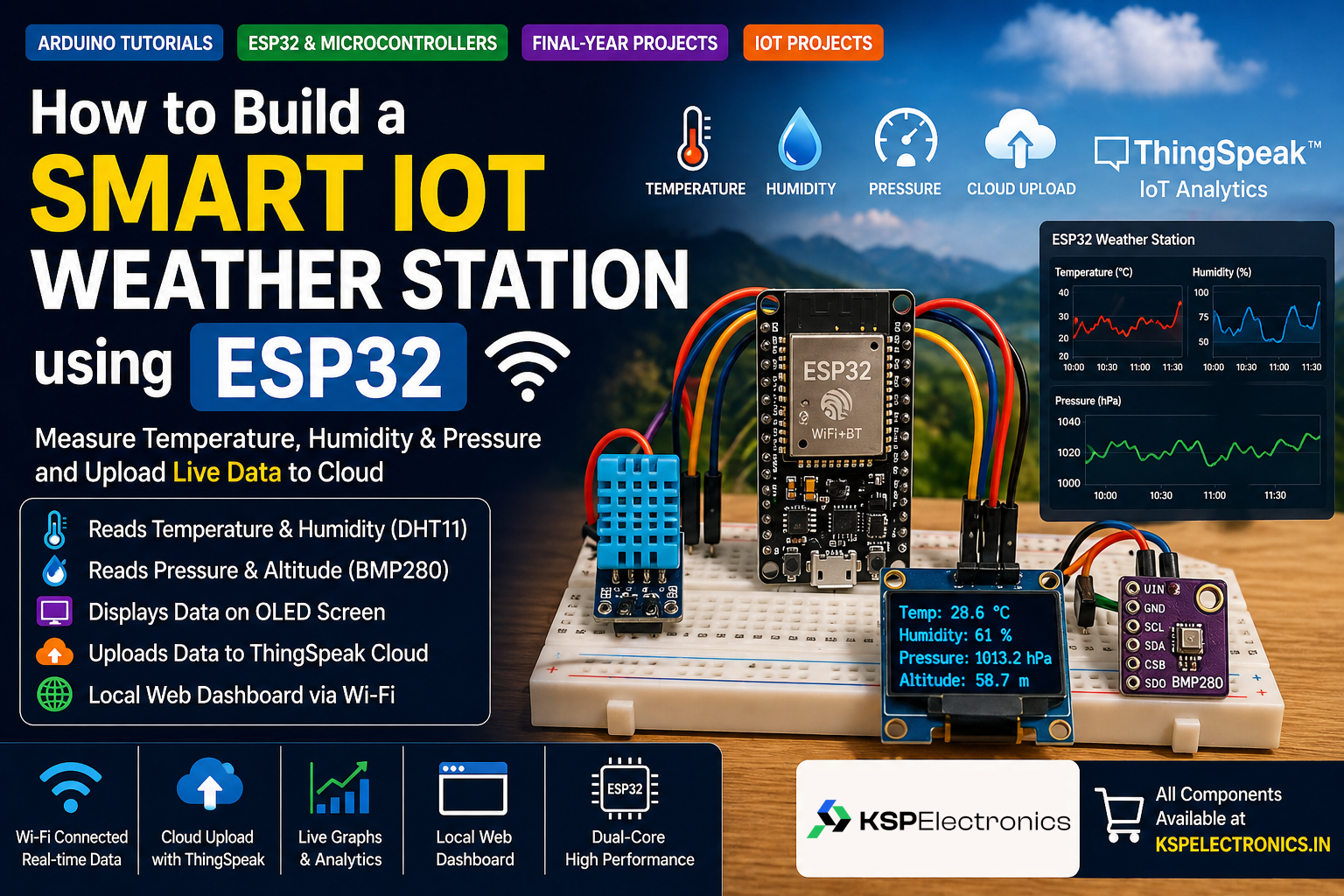
1. Smart IoT Weather Station
Board: ESP32 DevKit (₹520)
Sensors: DHT11 (temperature + humidity) + BMP280 (pressure + altitude)
Cloud: ThingSpeak free tier
What it does: Reads environmental data and pushes live graphs to a public ThingSpeak dashboard over Wi-Fi. Add an OLED to display readings locally.
Full build guide: How to Build an IoT Weather Station using ESP32
2. IoT Patient Health Monitoring System
Board: ESP32
Sensors: MAX30100 (heart rate + SpO2), MLX90614 (non-contact temperature), GSR sensor (stress)
What it does: Streams vital signs to a Blynk or ThingSpeak dashboard. Alerts caretakers via push notification or email when readings go out of range.
Why it ranks high: Healthcare IoT is a priority research area — examiners and viva panels respond very positively.
3. Smart Home Automation with Voice Control
Board: ESP32
Components: 4-channel relay module, PIR sensor, DHT11, smartphone with Google Assistant or Alexa
What it does: Controls lights, fans, and appliances via voice commands, mobile app, and automatic triggers (e.g., turn on fan when temperature exceeds 30°C).
4. Smart Agriculture Monitoring System
Board: ESP32
Sensors: Soil moisture sensor, DHT11, rain sensor, LDR (light intensity)
Actuators: Water pump via relay, buzzer
What it does: Monitors soil moisture, temperature, humidity, and light levels. Automatically irrigates crops when soil is dry. Uploads data to ThingSpeak for remote monitoring via smartphone.
Why it ranks high: India’s agricultural IoT market is massive — any project in this space is commercially relevant.
5. RFID Attendance System with Google Sheets Integration
Board: ESP32
Components: MFRC522 RFID reader, RFID cards, I2C LCD
What it does: Scans RFID cards and logs attendance with timestamps directly to a Google Sheet via Google Apps Script and Wi-Fi. No external server needed.
Why examiners love it: They use attendance systems every day. Seeing their own institution’s problem solved live in a demo is impactful.
6. LPG Gas Leakage Detector with Telegram Alert
Board: ESP32
Sensors: MQ-2 gas sensor
Alert: Buzzer + Telegram Bot push notification via Wi-Fi
What it does: Continuously monitors LPG concentration. Triggers a buzzer and sends a Telegram message to a family group chat instantly when dangerous levels are detected.
7. Smart Energy Meter
Board: ESP32
Sensors: ACS712 current sensor, ZMPT101B voltage sensor
What it does: Measures real-time power consumption and calculates monthly electricity cost. Displays locally on OLED and pushes data to a ThingSpeak graph.
8. IoT-Based Smart Parking System
Board: ESP32
Sensors: IR sensors (one per parking slot)
What it does: Detects occupancy of each slot and serves a live web page showing available and occupied slots. No internet required — works over local Wi-Fi.
9. Forest Fire Detection System
Board: ESP32
Sensors: Flame sensor, MQ-2 smoke sensor, DHT11 (temperature spike detection)
What it does: Detects fire by combining flame detection, smoke concentration, and rapid temperature increases. Sends an alert to forest department authorities via a Telegram Bot or SMS.
10. Wearable Fall Detection for Elderly People
Board: ESP32
Sensor: MPU6050 accelerometer + gyroscope
Alert: Buzzer + Telegram / SMS notification
What it does: Detects sudden acceleration spikes indicative of a fall, waits 2 seconds for user confirmation (button press), then sends an emergency alert with timestamp if not cancelled.
Order All Components from KSP Electronics
- ESP32-WROOM-32UE DevKit — ₹520
- ESP32 D1 Mini Kit — ₹496
- 830-Point Breadboard — ₹85
- NodeMCU ESP8266 V3 — ₹190
Related Guides from KSP Electronics
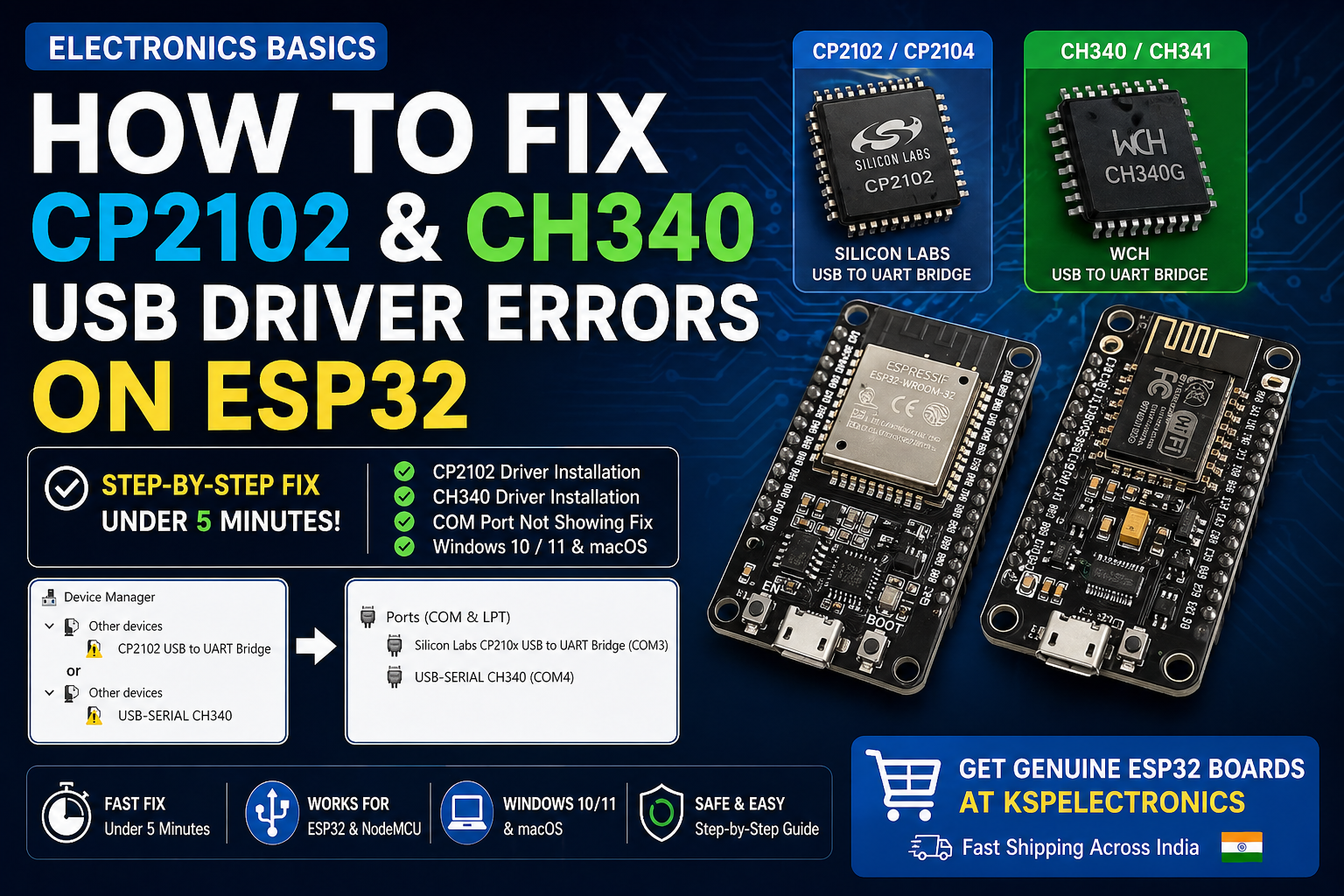
- How to Fix CP2102 & CH340 USB Driver Errors on ESP32
- How to Build a Smart IoT Weather Station using ESP32
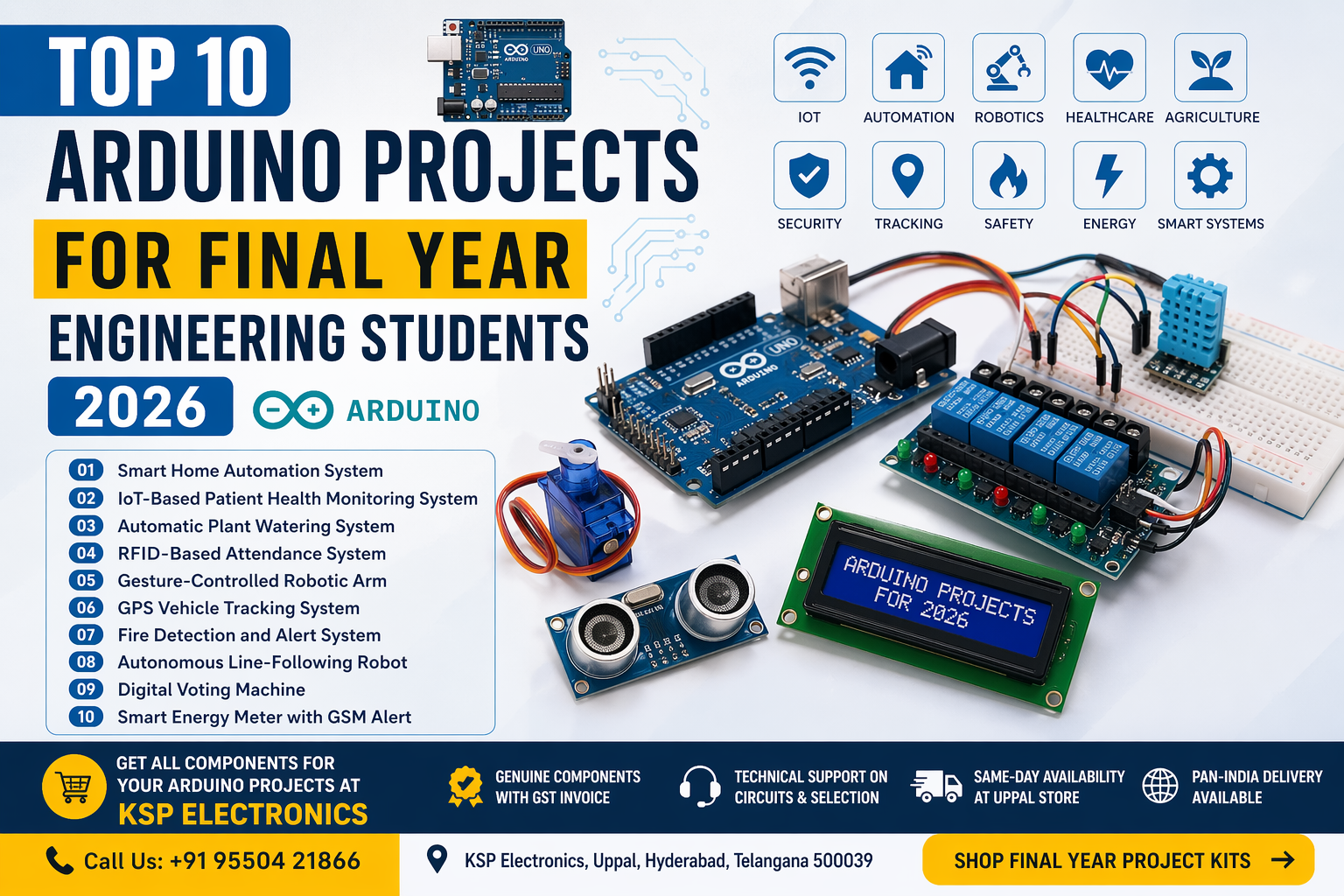
- Top 10 Arduino Projects for Final Year Engineering Students
- Top 10 IoT Projects for Final Year Students
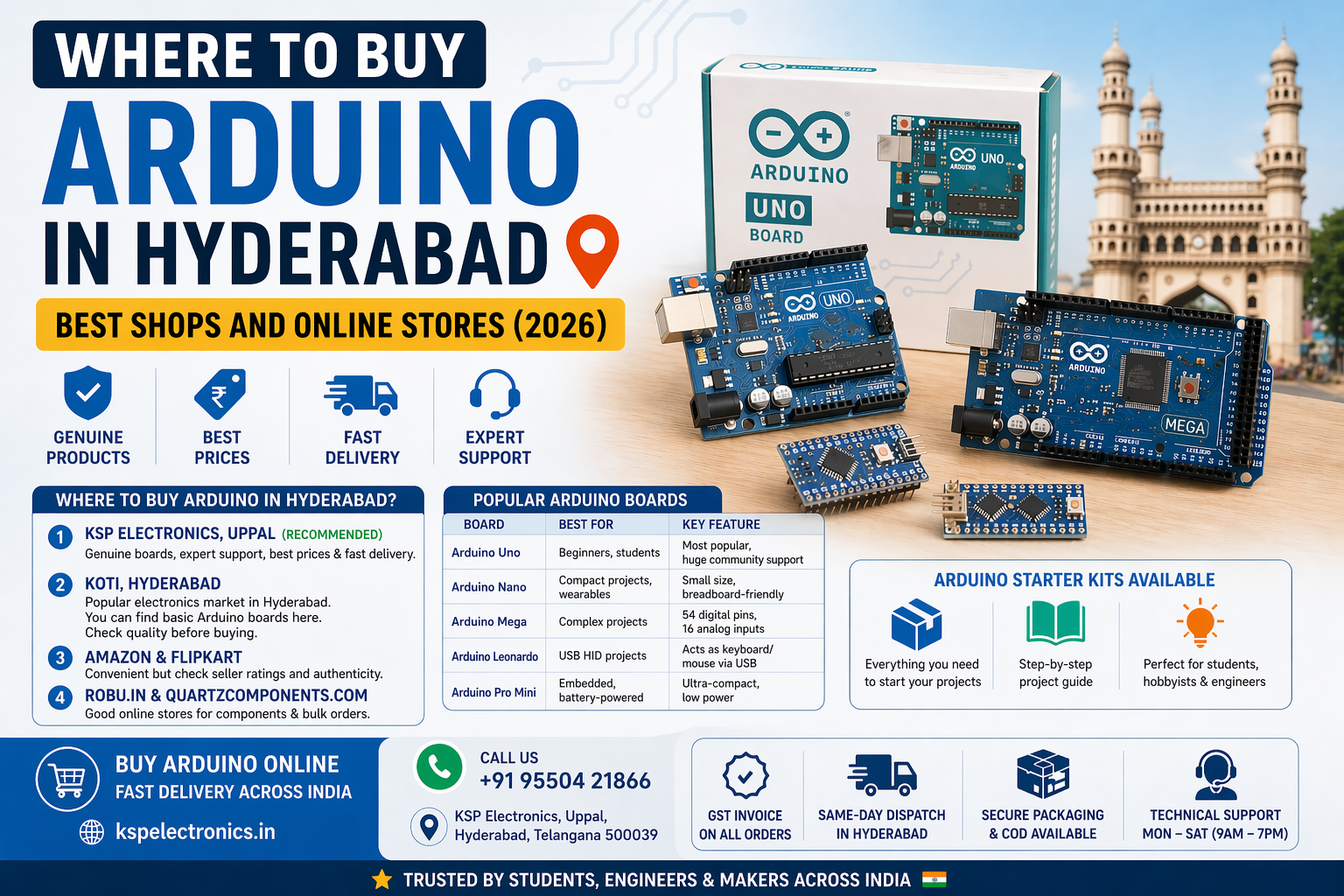
- Where to Buy Arduino in Hyderabad
Quick Decision Guide: Which Board for Which Project?
| Project Type | Recommended Board | Price at KSP |
|---|---|---|
| Basic LED / sensor projects, no connectivity | Arduino Uno | ₹250 |
| Compact wearable or small enclosure project | Arduino Nano | ₹210 |
| Budget Wi-Fi IoT node (1-2 sensors) | NodeMCU ESP8266 | ₹190 |
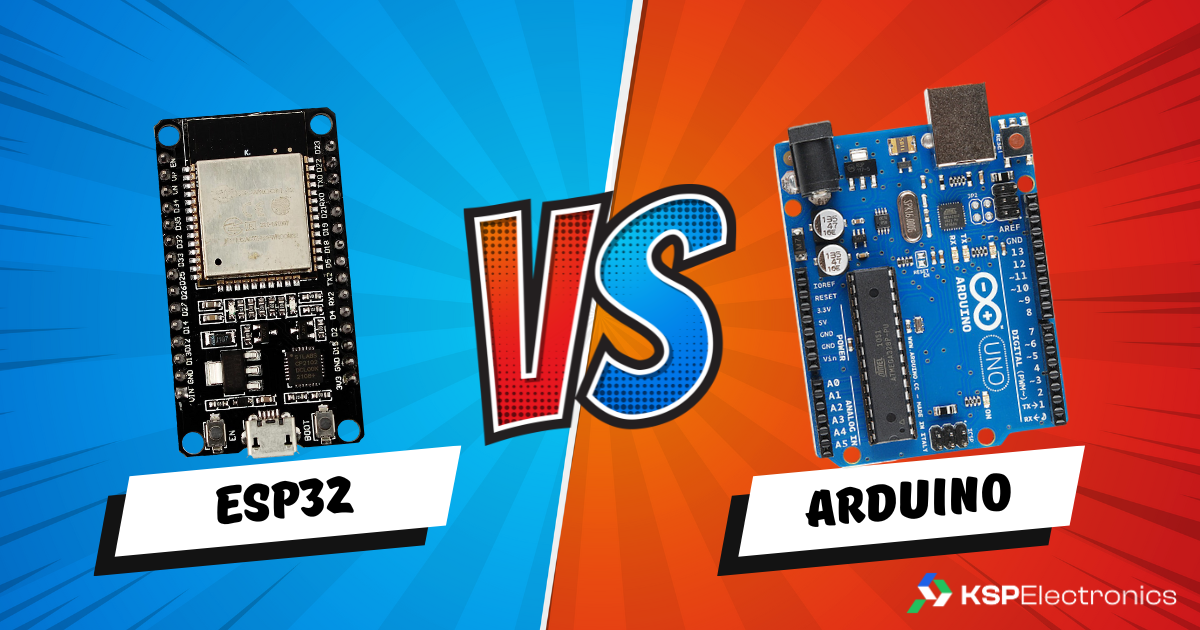
| IoT project with multiple sensors / BLE / Bluetooth | ESP32 DevKit | ₹520 |
| Compact IoT / D1 Mini form factor | ESP32 D1 Mini | ₹496 |
| AI, computer vision, robotics, Linux projects | Raspberry Pi 5 | ₹7,287+ |
Common Mistakes to Avoid When Choosing a Microcontroller
- Using a charge-only USB cable: This is the most common cause of “board not detected” errors. Always use a data-capable USB cable. See our driver troubleshooting guide if your board is not being recognised.
- Connecting 5V sensors to ESP32 GPIO: ESP32 GPIO pins are 3.3V tolerant only. Use a voltage divider (10k + 20k resistor) to step 5V signals down to 3.3V.
- Forgetting to install the board in Arduino IDE: ESP32 requires installing the Espressif board package separately. Arduino Uno works out of the box.
- Not holding the BOOT button during upload on ESP32: Many ESP32 DevKit boards require you to hold BOOT while initiating upload, especially on first use. See our ESP32 project guide for IDE setup steps.
Frequently Asked Questions
Can I use Arduino libraries on ESP32?
Yes. Most popular Arduino libraries (Adafruit sensor libraries, DHT, Wire, SPI, etc.) are compatible with the ESP32 since it uses the Arduino framework. Some libraries with hardware-specific code may need the ESP32 variant to be installed separately, but this is rare for commonly used libraries.
What is the best microcontroller for a B.Tech IoT project?
The ESP32 is the best choice for most B.Tech IoT final year projects in 2026. It has built-in Wi-Fi and Bluetooth, runs on the Arduino IDE, costs ₹496–520 at KSP Electronics, and is powerful enough for real-time sensor data collection, cloud uploads, local web servers, and BLE communication — all in one chip.