
 IoT Projects
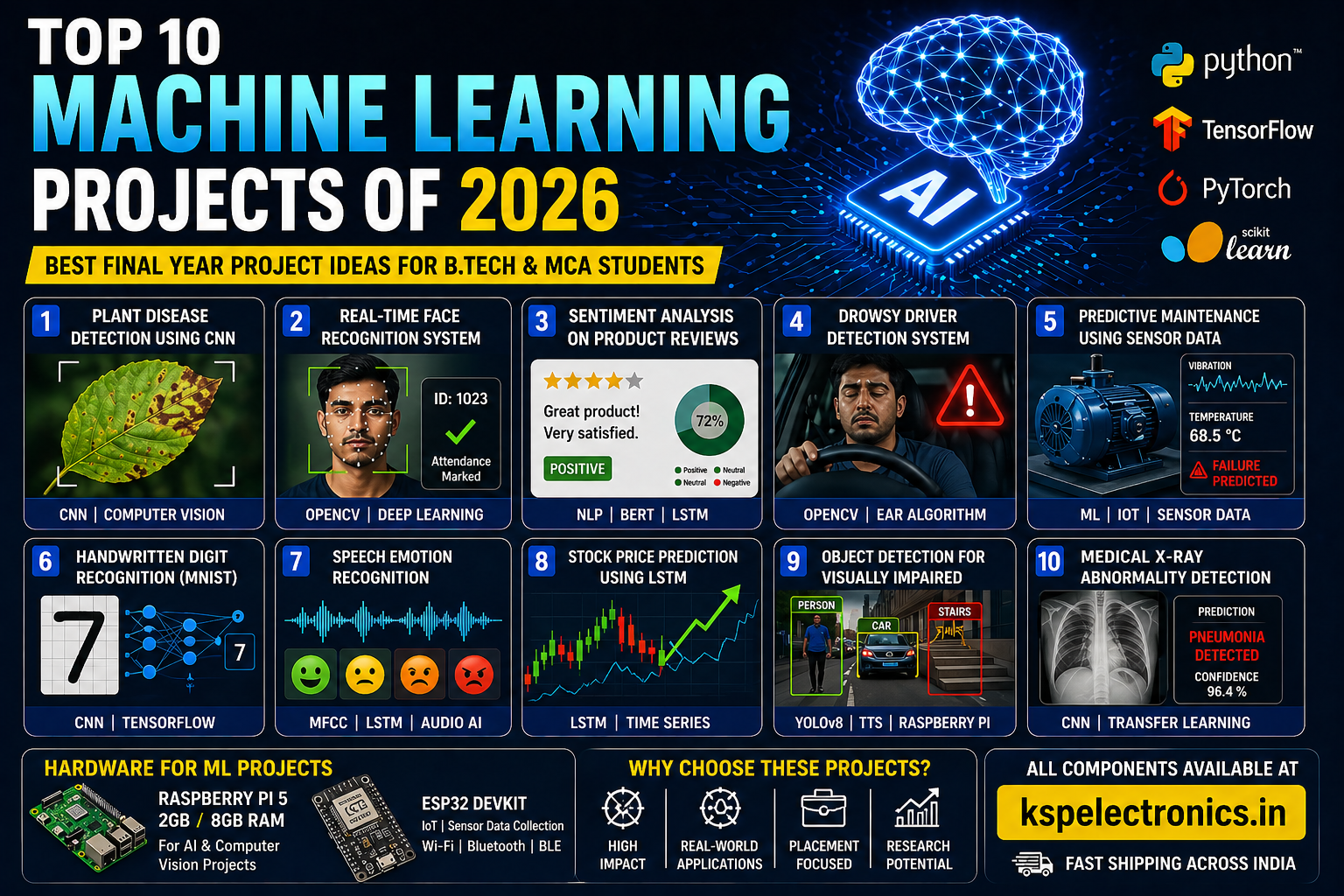
 ML Projects


Top 10 Arduino Projects for Final Year Engineering Students (2026)

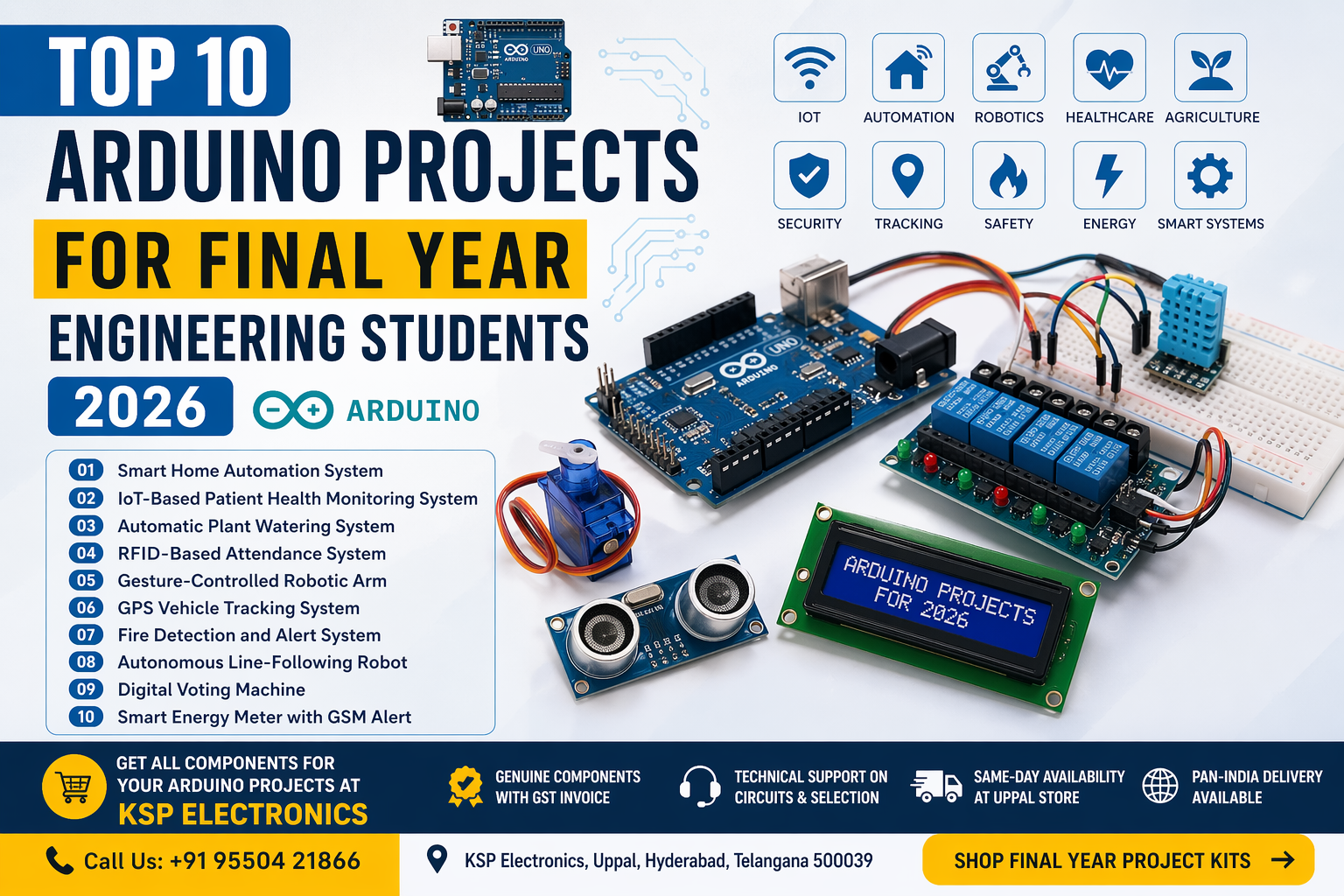
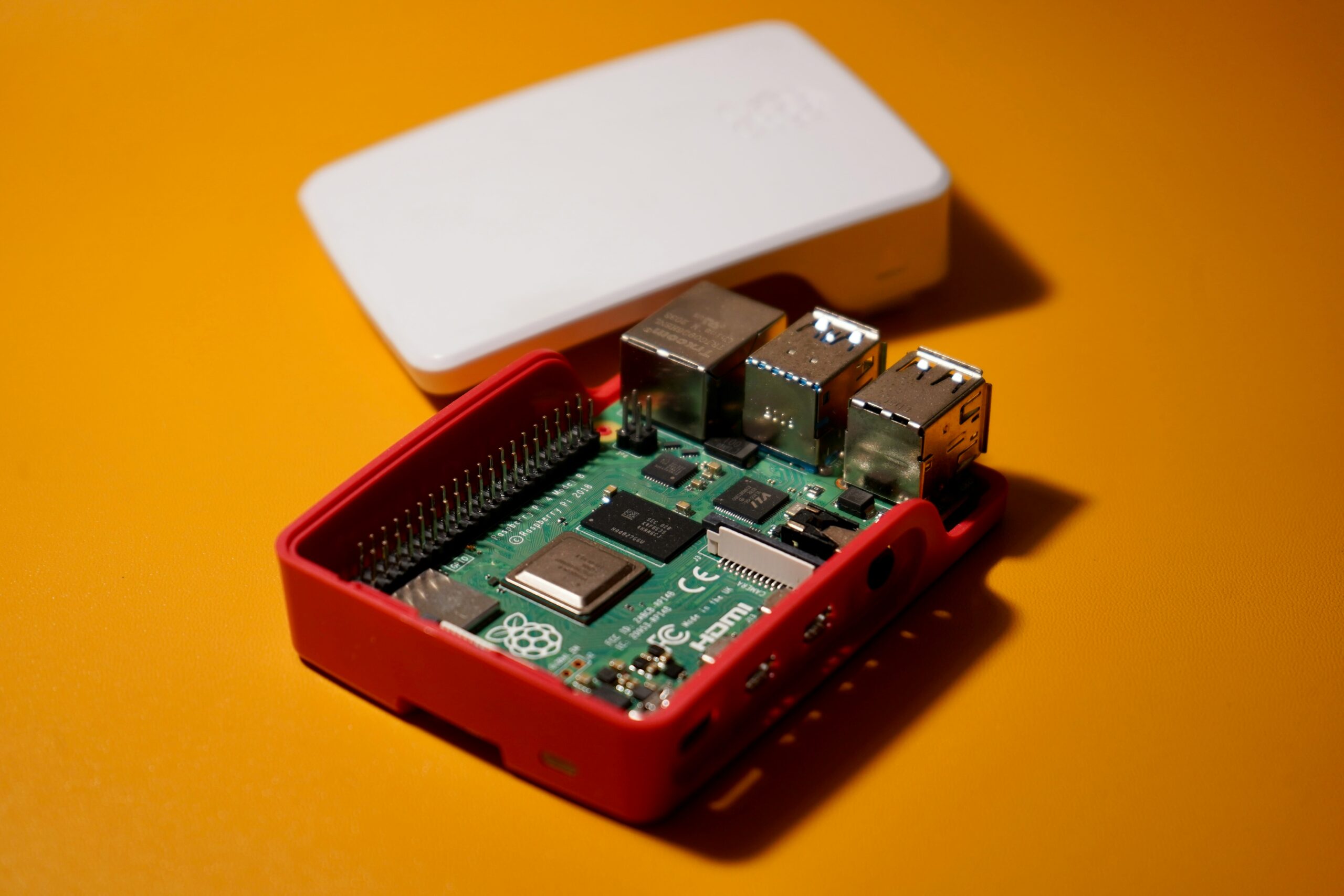
Whether you are searching for the best Arduino projects for final year engineering students, this guide covers them all. Arduino remains the most popular microcontroller platform for final year engineering projects across India’s B.Tech, M.Tech, and Diploma programs in 2026. It is beginner-friendly, has a massive library ecosystem, and is fully supported in the Arduino IDE. Below are the 10 most impactful, examiner-approved Arduino projects that balance technical depth with achievable timelines.
Top 10 Arduino Projects for Final Year Engineering Students
1. Smart Home Automation System
Components: Arduino Uno or ESP32, relay modules (4-channel), PIR sensor, smartphone (Bluetooth or Wi-Fi control)
What it does: Controls home appliances (lights, fans, AC) via a mobile app or voice command.
Why examiners love it: Demonstrates IoT integration, relay switching, and mobile connectivity in a single project. Highly relatable real-world application.
Difficulty: Intermediate
2. IoT-Based Patient Health Monitoring System
Components: ESP32 or NodeMCU, MAX30100 pulse oximeter, DHT11 temperature sensor, OLED display, ThingSpeak or Blynk
What it does: Reads heart rate, SpO2, and body temperature in real time and uploads data to a cloud dashboard accessible by doctors or family remotely.
Why examiners love it: Real-world healthcare application, cloud integration, and multiple sensor fusion.
Difficulty: Intermediate to Advanced
3. Smart IoT Weather Station
Components: ESP32 DevKit (₹520), DHT11, BMP280, 0.96" OLED, ThingSpeak
What it does: Measures temperature, humidity, and atmospheric pressure and streams data live to a cloud dashboard over Wi-Fi.
Why examiners love it: Clean wiring, live cloud demo, and multiple sensor integration. See our full guide: How to Build an IoT Weather Station using ESP32.
Difficulty: Beginner to Intermediate
4. Automated Plant Watering System
Components: Arduino Uno, soil moisture sensor, 5V mini water pump, relay module, LCD display
What it does: Monitors soil moisture and automatically activates a water pump when the soil gets too dry.
Why examiners love it: Agriculture application — a high-priority domain in India. Simple hardware with clear social impact.
Difficulty: Beginner
5. RFID-Based Attendance System
Components: Arduino Uno or ESP32, MFRC522 RFID reader, RFID cards/tags, SD card module or Google Sheets (via ESP32 Wi-Fi)
What it does: Reads RFID cards to record student attendance. ESP32 version uploads attendance directly to Google Sheets over Wi-Fi.
Why examiners love it: Practical application they use every day. Cloud version is impressive for viva.
Difficulty: Beginner to Intermediate
6. Gas Leakage Detector with SMS Alert
Components: Arduino Uno, MQ-2 or MQ-5 gas sensor, GSM module (SIM800L) or ESP32 with Wi-Fi, buzzer, LED
What it does: Detects LPG or methane gas concentration and triggers a buzzer alarm while sending an SMS or push notification alert.
Why examiners love it: Safety application with immediate real-world value. Easy to demonstrate in real time.
Difficulty: Beginner
7. Obstacle-Avoiding Robot
Components: Arduino Uno, HC-SR04 ultrasonic sensor, L298N motor driver, DC motors + chassis, servo motor
What it does: Moves autonomously and steers away from obstacles detected by the ultrasonic sensor.
Why examiners love it: Highly visual — moves during the demo. Covers motors, sensors, and control logic together.
Difficulty: Beginner
8. Smart Energy Meter with IoT Monitoring
Components: ESP32, ACS712 current sensor, ZMPT101B voltage sensor, OLED display, ThingSpeak
What it does: Measures real-time power consumption of a household circuit and displays it locally and on a cloud dashboard.
Why examiners love it: Highly relevant to electrical engineering (EEE). Involves power measurement and cloud integration.
Difficulty: Intermediate
9. Blind Assistance Device using Ultrasonic Sensors
Components: Arduino Nano, 3x HC-SR04 sensors, vibration motor or earpiece speaker
What it does: A wearable device worn on the wrist or glasses frame that detects obstacles in front, left, and right, and provides haptic or audio feedback to guide a visually impaired user.
Why examiners love it: Strong social impact narrative. Compact form factor using the Nano. Multiple sensors.
Difficulty: Intermediate
10. Smart Parking System
Components: ESP32, IR sensors (one per slot), LED strip or LCD display, web server hosted on ESP32
What it does: Detects which parking slots are occupied using IR sensors and displays real-time availability on a web page served by the ESP32 itself.
Why examiners love it: Smart city application. The live web dashboard running on the ESP32 with no external server is technically impressive.
Difficulty: Intermediate
Get All Components from KSP Electronics
Every component listed above is available from KSP Electronics. Order the entire kit for your project in one place:
Frequently Asked Questions
Which Arduino project is best for ECE final year?
The Smart Energy Meter with IoT Monitoring and IoT Patient Health Monitoring System are the strongest choices for ECE students — they involve sensors, signal conditioning, wireless communication, and cloud integration. The weather station is ideal if you want a clean, low-risk project with high viva marks.
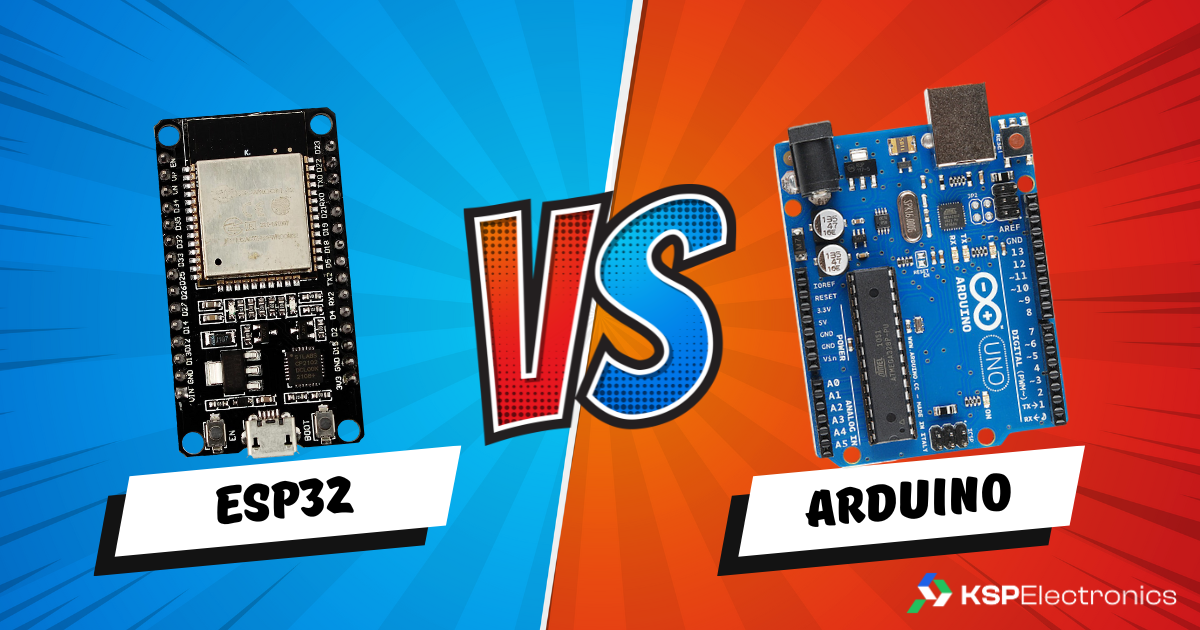
Should I use Arduino Uno or ESP32 for my final year project?
If your project involves any Wi-Fi, Bluetooth, or cloud connectivity (which most modern IoT topics do), choose the ESP32. It is Arduino IDE compatible, so you use the same programming interface but gain built-in wireless capability. If your project is purely hardware-driven with no connectivity needed, the Arduino Uno is sufficient and simpler to work with.