IoT mini project ideas are in high demand among engineering students looking for practical submissions. This collection of IoT mini project ideas covers beginner to advanced builds using ESP32 and Arduino. IoT projects are the highest-scoring category of final-year projects across ECE, EEE, and CS departments in Indian engineering colleges. They are visual, demonstrable, connected to real problems, and prove that you understand multiple technology layers — hardware, firmware, and cloud. Below are the top 10 IoT projects for 2026, with component lists linked directly to KSP Electronics so you can order everything in one go.
Best IoT Mini Project Ideas for Engineering Students
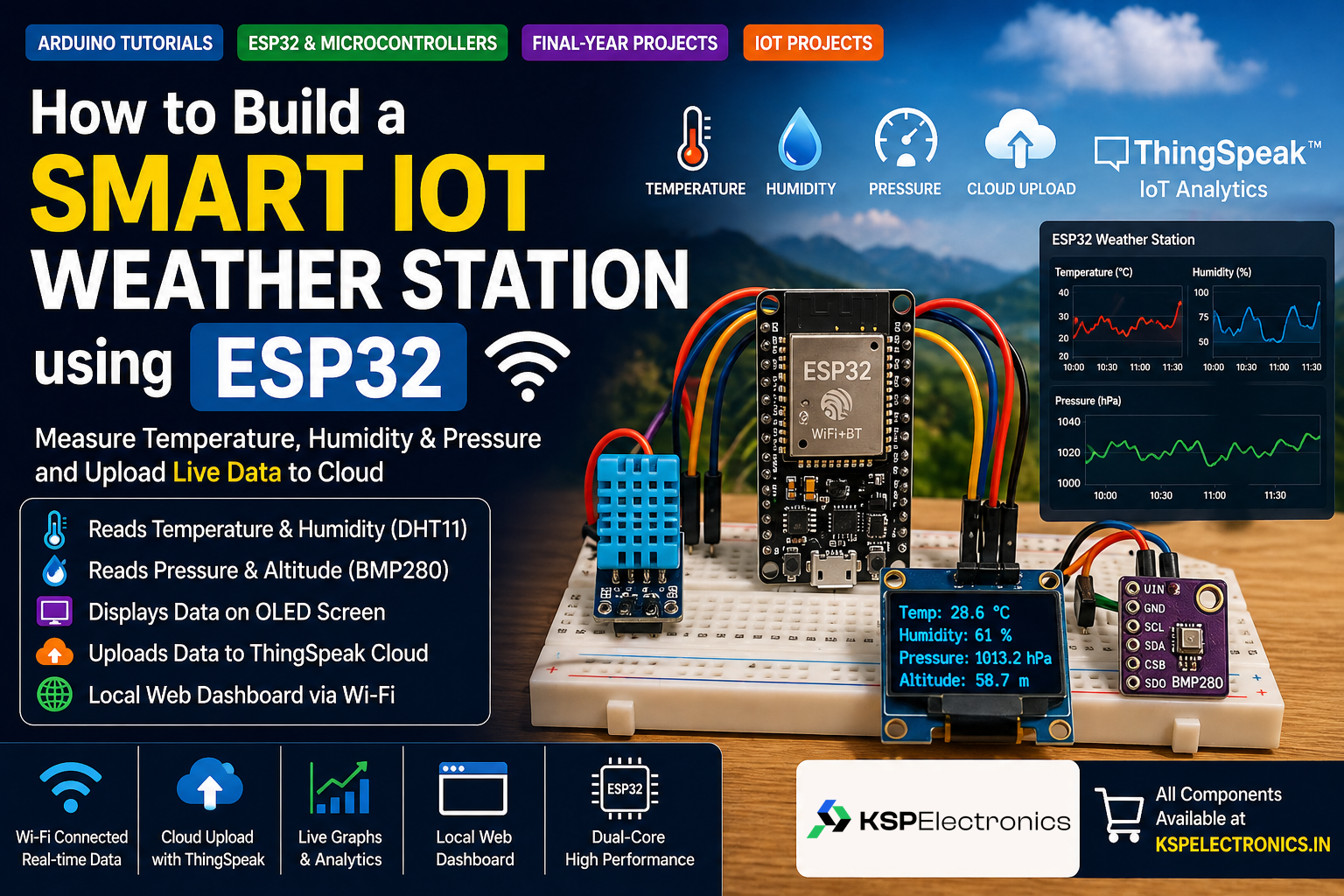
1. Smart IoT Weather Station
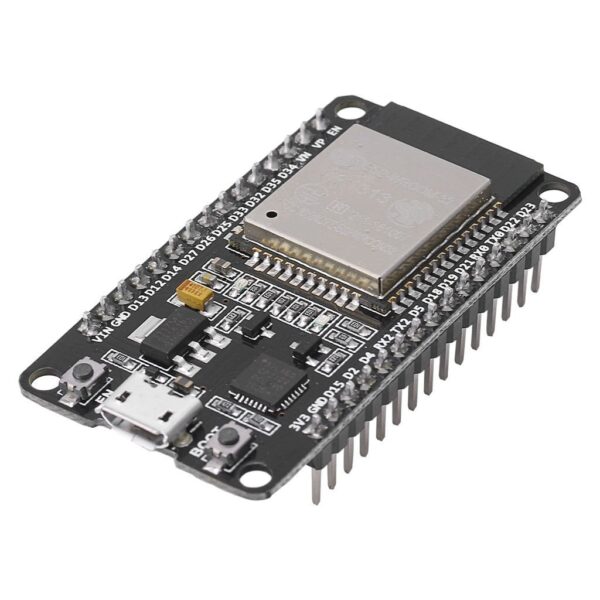
Board: ESP32 DevKit (₹520)
Sensors: DHT11 (temperature + humidity) + BMP280 (pressure + altitude)
Cloud: ThingSpeak free tier
What it does: Reads environmental data and pushes live graphs to a public ThingSpeak dashboard over Wi-Fi. Add an OLED to display readings locally.
Full build guide: How to Build an IoT Weather Station using ESP32
2. IoT Patient Health Monitoring System
Board: ESP32
Sensors: MAX30100 (heart rate + SpO2), MLX90614 (non-contact temperature), GSR sensor (stress)
What it does: Streams vital signs to a Blynk or ThingSpeak dashboard. Alerts caretakers via push notification or email when readings go out of range.
Why it ranks high: Healthcare IoT is a priority research area — examiners and viva panels respond very positively.
3. Smart Home Automation with Voice Control
Board: ESP32
Components: 4-channel relay module, PIR sensor, DHT11, smartphone with Google Assistant or Alexa
What it does: Controls lights, fans, and appliances via voice commands, mobile app, and automatic triggers (e.g., turn on fan when temperature exceeds 30°C).
4. Smart Agriculture Monitoring System
Board: ESP32
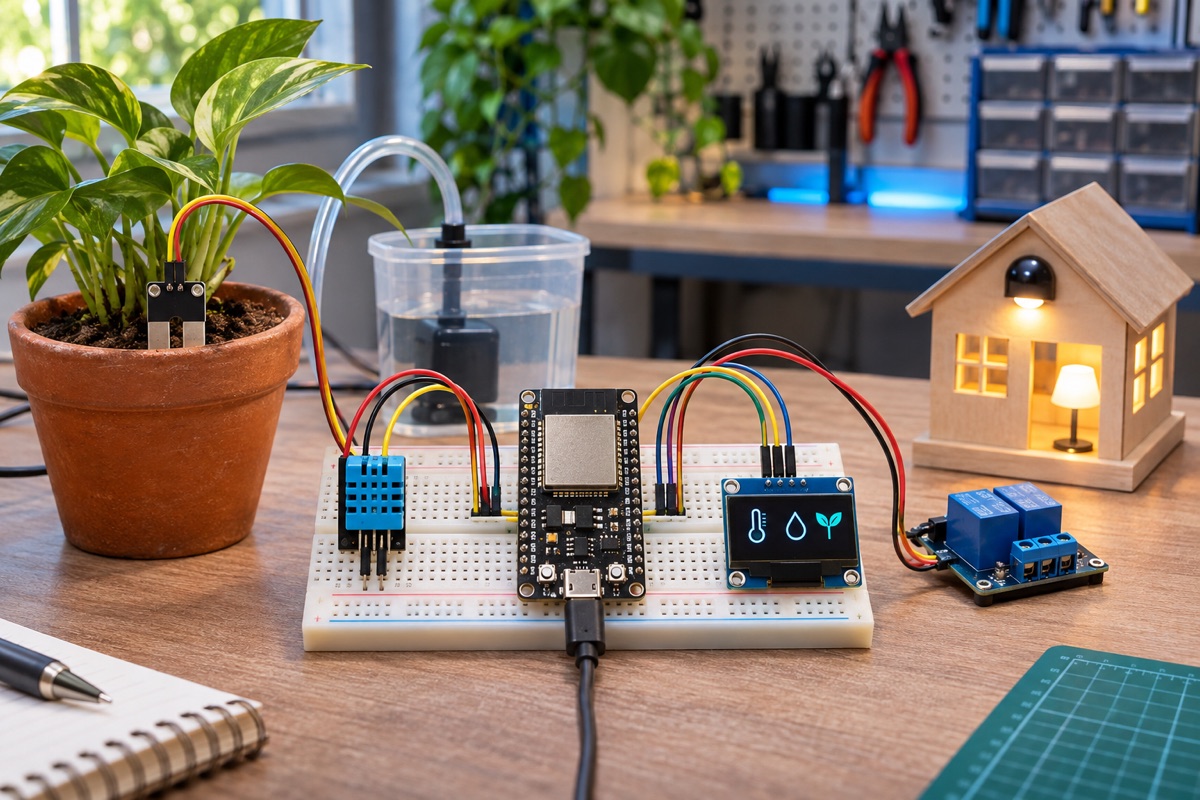
Sensors: Soil moisture sensor, DHT11, rain sensor, LDR (light intensity)
Actuators: Water pump via relay, buzzer
What it does: Monitors soil moisture, temperature, humidity, and light levels. Automatically irrigates crops when soil is dry. Uploads data to ThingSpeak for remote monitoring via smartphone.
Why it ranks high: India’s agricultural IoT market is massive — any project in this space is commercially relevant.
5. RFID Attendance System with Google Sheets Integration
Board: ESP32
Components: MFRC522 RFID reader, RFID cards, I2C LCD
What it does: Scans RFID cards and logs attendance with timestamps directly to a Google Sheet via Google Apps Script and Wi-Fi. No external server needed.
Why examiners love it: They use attendance systems every day. Seeing their own institution’s problem solved live in a demo is impactful.
6. LPG Gas Leakage Detector with Telegram Alert
Board: ESP32
Sensors: MQ-2 gas sensor
Alert: Buzzer + Telegram Bot push notification via Wi-Fi
What it does: Continuously monitors LPG concentration. Triggers a buzzer and sends a Telegram message to a family group chat instantly when dangerous levels are detected.
7. Smart Energy Meter
Board: ESP32
Sensors: ACS712 current sensor, ZMPT101B voltage sensor
What it does: Measures real-time power consumption and calculates monthly electricity cost. Displays locally on OLED and pushes data to a ThingSpeak graph.
8. IoT-Based Smart Parking System
Board: ESP32
Sensors: IR sensors (one per parking slot)
What it does: Detects occupancy of each slot and serves a live web page showing available and occupied slots. No internet required — works over local Wi-Fi.
9. Forest Fire Detection System
Board: ESP32
Sensors: Flame sensor, MQ-2 smoke sensor, DHT11 (temperature spike detection)
What it does: Detects fire by combining flame detection, smoke concentration, and rapid temperature increases. Sends an alert to forest department authorities via a Telegram Bot or SMS.
10. Wearable Fall Detection for Elderly People
Board: ESP32
Sensor: MPU6050 accelerometer + gyroscope
Alert: Buzzer + Telegram / SMS notification
What it does: Detects sudden acceleration spikes indicative of a fall, waits 2 seconds for user confirmation (button press), then sends an emergency alert with timestamp if not cancelled.
Order All Components from KSP Electronics
Related Guides from KSP Electronics
IoT mini project ideas: frequently asked questions
What is the easiest IoT mini project for beginners?
A temperature and humidity monitor with an ESP32 and a DHT11 or DHT22 sensor, sending readings to ThingSpeak or Blynk. It teaches Wi-Fi, sensors and cloud dashboards in a single weekend build. See our IoT weather station ESP32 guide.
How much does an IoT mini project cost in India?
Most IoT mini projects cost between ₹800 and ₹2,500 in components: a microcontroller board, one or two sensors, a breadboard, jumper wires and a USB cable. Cloud platforms such as ThingSpeak have free tiers that are enough for a college project.
Should I use ESP32 or NodeMCU for an IoT mini project?
The ESP32 is the better default: it has more GPIO pins, a better ADC, Bluetooth and a dual-core processor for a small price difference. Read NodeMCU vs ESP32 for the details.
Further reading: ThingSpeak IoT platform · Blynk IoT platform


 IoT Projects
 ML Projects

 Training